Module 5 · Lesson 1 · 8 min read
When Meditation Makes Kundalini Worse
Introduction
If meditation triggered your Kundalini, or makes your symptoms worse, the wisest step is usually to stop meditating for a while and start living. In this lesson you will learn why too much inward practice overloads the system, which breath practices to pause, what to do instead, and how to return to meditation safely when you are ready.
Lesson overview
This section contains a general overview of topics that you will learn in this lesson.
- Why long or forced meditation can intensify Kundalini symptoms.
- The signs that your practice has become too much.
- Which breathwork and pranayama to pause after a difficult experience.
- What to do instead: move outward into body, nature and life.
- How and when to restart meditation safely.
The core teaching
Kundalini is the life force, and it moves by its own intelligence. When you sit for hours trying to push it inward or upward with your mind, you create resistance, and the energy piles up in the head as pressure, tingling and sleeplessness. After a difficult experience, pause meditation and controlled breathing, rule out medical causes, and turn outward: move, walk in nature, do real work, live your purpose. When life flows again, meditation tends to happen by itself.
Why can meditation make Kundalini symptoms worse?
Meditation is valuable, but it is not meant to be done without limit. Problems usually start when someone meditates for hours, focuses constantly on the third eye or on being the witness, or tries to reach a particular state through effort and thought. If Kundalini has been active for a long time, or awakened by accident, this extra inward pressure can be too much.
Your whole body takes part in Kundalini: the nervous system, circulation, muscles, digestion, breathing, everything. If you ignore all that and keep pulling your energy towards the centre of the head, you invite head pressure, migraines and intense tingling. In my experience this is one of the most common causes of a difficult awakening.
There is a second reason. After a frightening Kundalini experience, the brain may store it like a trauma. Then every attempt to sit still and turn inwards triggers fight, flight or freeze. Instead of relaxing, the system contracts, and sleep, appetite and daily functioning begin to suffer.
What are the signs that your practice has become too much?
- Head pressure, headaches or strong tingling after you sit.
- Poorer sleep, or waking wired at night.
- Loss of appetite or disturbed digestion.
- Restlessness, fear or a racing heart when you try to meditate.
- Feeling spaced out, unreal or unable to function in daily life.
- Needing more and more practice to feel “okay”.
Why can’t you force Kundalini?
Kundalini is like a fire inside you, with its own intelligence. In awakening, the ego and the armour of personality slowly dissolve. When you try to drive this force in a chosen direction through meditation, you push against that intelligence, and the resistance shows up in the nervous system, the brain and the body.
I processed my own Kundalini without using meditation to move or trigger it. And the life force is not meant to stay turned inward forever. The inward journey is for recognising who you are. Once that integration happens, the energy wants to move outward, into life.
Does this apply to breathwork and pranayama too?
Yes. When I say meditation here, I include breath practices. After a difficult experience, pause anything that involves:
- controlling the breath strongly;
- holding the breath, including kumbhak;
- closely monitoring the breath;
- changing breathing ratios or counts.
Choose instead practices in which the breath moves on its own and the instinctive brain takes over: walking with a relaxed mouth exhalation, belly breathing lying down where you simply let the belly move, and restful poses. This course teaches many techniques; in a difficult phase, fewer and gentler is better.
What should you do instead?
Stop meditating for now and start living. Kundalini wants to move through your limbs, your work and your relationships, not only through your head.
- Move your body: walk, climb stairs, swim, do physical chores.
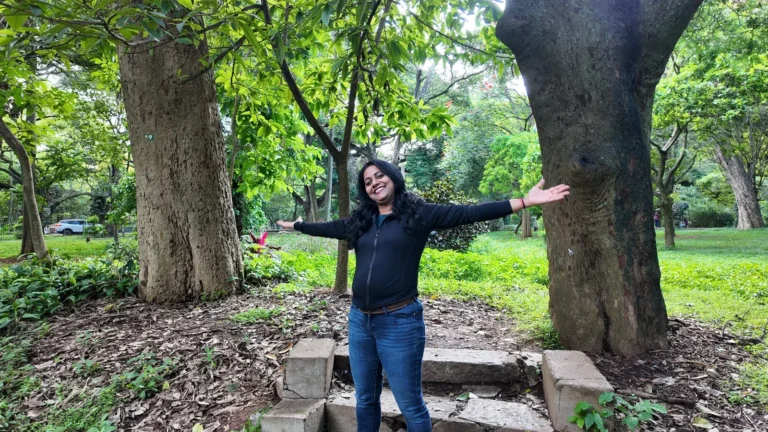
- Go into nature: open space, trees, water, wind, earth under your feet.
- Take the morning sun: face it with eyes closed or lowered; never stare at it.
- Get your body healthy: regular meals, sleep, water, medical check-ups.
- Live your purpose: put your energy into work and creation that matter to you.
In my understanding, when you move your body through life and among the five elements of nature, the five pranas, the five movements of life energy in the body, come back into balance. See Walking with the Breath in Nature.
The one kind of meditation I suggest: self-inquiry
If you still want to sit, use it to understand rather than to push energy. Sit quietly for a few minutes, eyes open if you prefer, and ask yourself simple questions:
- Why am I here? What am I doing with my life?
- What does my soul want?
- Why has Kundalini awakened in me, and what is it asking of me?
Write down whatever comes. Then get up and act on one thing. Understanding what Kundalini is and what she wants is the first step. Read What Is Kundalini Awakening? if you have not yet.
How do you restart meditation safely after a difficult experience?
Be patient. Kundalini is not a pill, a level or a goal you reach by sitting longer. Before restarting, check these:
- Medical causes for your symptoms have been ruled out.
- You are sleeping and eating reasonably well again.
- You can sit quietly without fear rising.
Then begin small: five minutes, eyes open or half-closed, after a walk rather than first thing. Let the breath be natural. Do not focus on the third eye or try to create a state. If symptoms return, stop and go back to living for a while. If you want to go deeper, do it with an experienced teacher who can see what is happening in your system.
When life becomes meditation
The best meditation happens by itself. When you are present with the wind on your skin, a conversation, your work or a walk, that is meditation. I sit when my life force wants me to sit, not because a schedule says so. When Kundalini flows without resistance, presence becomes your normal state, and you no longer need to chase it on a cushion.
A student’s story: from bedridden to the physical project
One student’s Kundalini had taken his nervous system into such a state that he was bedridden and could not process the energy. For months he had tried different methods on his own in his country, without finding a way through. Finally he came to work with me in person, in nature.
The first thing in such cases is never more sitting. It is to stop forcing, to understand what has happened to the nervous system, and to bring the body gently back into life, step by step, in an environment that supports it.
Want your breathwork checked and tailored to you? Sanju can guide your practice in a one-to-one session.
Book a session with SanjuYour two-week reset
Week 1
Pause and move
- No meditation, no breath holds, no breath counting.
- A daily walk of 20 to 40 minutes, outdoors.
- One physical job each day: cooking, cleaning, gardening.
- Belly breathing lying down at night, simply letting the belly move.
Week 2
Understand
- Five minutes of self-inquiry with a notebook, three times a week.
- Act on one insight each time.
- Notice whether sleep, appetite and head pressure are settling.
When to get help
When to seek medical or professional help
- Severe or new headaches, numbness, weakness, fainting or changes in vision need urgent medical care.
- If you are not sleeping for days, feel detached from reality, hear or see things others do not, or cannot function, see a doctor and a mental-health professional promptly.
- Do not stop prescribed medicine on your own.
- If you have thoughts of harming yourself, contact local emergency services or a crisis line now.
- For new or worsening symptoms, see a doctor.
Self-check
- How many hours a week do you spend in inward practice, and how many moving through life?
- Which of the warning signs do you recognise?
- What is one thing your life force wants you to do this week?
Knowledge check
These questions help you check your understanding of this lesson. If you can’t answer one, select it to go back to the part of the lesson that answers it.
Additional resources
This section contains helpful links to related content. It isn’t required, so consider it supplemental.
Lesson complete. Want help applying it to your own life?
Book a session with Sanju
Guru Sanju14 years guiding people through Kundalini awakening, with students in 50+ countries. I help you understand what is happening to you and turn it into growth.
Kundalini Yoga and Breathwork · Course menu
Kundalini Yoga and Breathwork