Module 1 · Lesson 2 · 15 min read
Core Practices
Introduction
Physical symptoms ease through the body, so a few simple practices done every day matter more than anything you read. In this lesson I teach, step by step, every practice I mention in this course. Whenever another lesson says “tap the body” or “sit in the squat”, come back here for the full instructions.
At the end you will find a table showing which practice to use for which symptom, and a simple first week to begin with.
Lesson overview
This section contains a general overview of topics that you will learn in this lesson.
- Calm the body with belly breathing, slow mouth exhalation and the external breath hold.
- Wake up a tired body with palming, body tapping and the child’s pose.
- Release pressure from the legs, pelvis and belly with the squat and the wall reset.
- Train the nervous system with warm-and-cool showers and simple daily tasks.
- Ground the energy in nature, and learn how to let kriyas happen safely.
The core teaching
Most physical symptoms of Kundalini, the life force that rises through your spine, come from more energy than a tense, shallow-breathing body can carry. You do not fix that by pushing harder. You relax the nervous system, wake up the body with movement and touch, and let the extra energy flow down into the earth. Every practice here does one of those three things. Practise gently, and always rule out a medical cause first.
How do you do belly breathing (Kund Breathing)?
Belly breathing is the base of everything I teach. When you are tired, dizzy or in pain, the breath climbs into the chest and the body reads that as danger. When the belly moves, the diaphragm, the dome-shaped muscle under the lungs, massages the organs and tells the body it is safe. It also lets prana, the life energy carried by the breath, reach every cell.
- Lie on your back. You can bend your knees and rest your feet on the floor.
- Place one hand on your belly and one on your chest.
- Breathe in gently through the nose and let only the belly rise. The chest stays quiet.
- Breathe out and let the belly fall back on its own.
- Keep your attention on the breath. When the mind wanders, come back.
How long: begin with 5 to 10 minutes and build to 20 or 30. Once you know it lying down, keep it going through the day while you sit, walk and work. For dizziness I tell people to belly-breathe all day long.
How do you practise slow mouth exhalation?
A long, slow out-breath is the quickest way I know to bring the body out of fight-or-flight, the survival state in which the heart races and muscles tighten. It also draws energy down from a crowded head and softens pain.
- Sit or stand comfortably with a long, relaxed spine. Loosen your jaw and face.
- Let a natural breath come in through the nose, without force.
- Breathe out slowly through the mouth, like a warm sigh, until the belly is completely empty.
- Keep it smooth, as if you were gently fogging a mirror. No jerks and no hurry.
- Let the next in-breath come by itself. Do 5 to 10 rounds.
In daily life: keep the same long out-breath while you wash dishes, cook, bathe, walk or fold clothes. Let the breath become the rhythm of your day. When pain or sensitivity is constant, practise in cycles: 5 to 10 minutes on, a few minutes of rest, and repeat.
The out-breath should relax you, never leave you gasping. If you feel light-headed, stop, sit and breathe quietly through your nose for a minute.
How do you practise the external breath hold?
Holding the breath out, with the lungs empty, clears brain fog and brings scattered attention back into the body. In yoga it is called external kumbhak. I use it first thing in the morning for fatigue, and with students whose breath feels short.
- Lie still or sit upright, one hand on the belly and one on the chest.
- Breathe in slowly, filling only the belly.
- Breathe out slowly and completely through the mouth.
- With the lungs empty, pause. Keep the belly still and the mouth closed.
- Hold only as long as is comfortable, at first 3 to 5 seconds. Never strain.
- Breathe in gently. A few quick breaths may come on their own. Let them.
Do 5 to 10 rounds. Over the days the comfortable hold grows by itself. A calm, short hold is worth more than a long, strained one. Longer holds and more rounds should only be learned with guidance.
How do you do forceful mouth exhalation?
Short, firm out-breaths through the mouth move apana, the downward-moving energy that governs elimination. I use them when the body feels heavy and stuck, or when the belly is bloated and full of gas.
- Sit upright and relaxed, shoulders soft.
- Breathe out through the mouth in a short, steady pulse, as if blowing out a candle.
- Let the in-breath happen on its own through the nose. Do not breathe in fast or hard.
- Count the out-breaths. Begin with one round of 20.
- Then rest, belly-breathe for a minute and notice the body.
Burping or releasing gas afterwards is common and is a sign of release. Stop at once if you feel dizzy, faint, numb or in pain. More rounds should only be added with guidance, never pushed on your own.
How do you practise palming and eye movement?
When fatigue or overwhelm makes you feel absent from your own body, palming reconnects the senses, especially sight, and brings you back into the room.
- Make light fists. Rest the knuckle side of each fist just under the cheekbones.
- Let the palms cover the eyes and forehead softly, like a cocoon. Do not press on the eyeballs.
- Belly-breathe for about 20 breaths, or 2 minutes.
- Open your eyes slowly and move only your gaze: up, down, side to side and diagonally.
- Look around the room and silently tell yourself: I am here, in this room, in this body.
How do you do body tapping?
Tapping wakes up a body that has gone numb, heavy or frozen. It brings blood, warmth and oxygen into the tissues and tells the nervous system to come back online. You can begin even in bed.
Face and head: with cupped hands, tap your cheeks, forehead, temples, eyebrows and jaw. Press around the eye sockets with your fingertips and press the two hollows near the ears. Then tap behind the ears, the back of the head and the top of the skull. Continue for a few minutes.
Seated: sit up and tap the thighs, knees, calves and feet. Then tap the belly, ribs, chest and as much of the back as you can reach. Tap one arm with the other hand, then switch. Finish with the head and neck, gently. Keep a long mouth exhalation going throughout.
Standing: once standing is easy, divide the body into three zones: head and shoulders, the trunk, and the legs down to the soles. Tap each zone thoroughly with cupped hands. Start with 5 minutes and build up slowly.
If you are bedridden: lie flat and lightly pat your face with whatever strength you have, until you feel circulation returning.
Warmth, tingling, burping or a light sweat are normal signs that the body is waking. Tap firmly enough to feel it, never hard enough to hurt, and go gently over bruises, veins or sore joints.
How do you rest in the child’s pose?
When the body is too tired to stand, the child’s pose lets gravity soothe the nervous system. I teach it in bed, so even a very weak body can begin.
- Kneel on the bed or a mat and sit back on your heels.
- Slowly lower your forehead towards the mattress.
- Stretch your arms forward, or rest them beside your body, whichever is easier.
- Put a pillow under your head if the forehead does not reach.
- Belly-breathe and let the body become heavy.
How long: 10 to 15 minutes. Skip it or use plenty of cushions if your knees hurt.
How do you use the squat to ground pressure?
The squat is one of the most natural human positions. Our ancestors ate, worked and rested in it. It opens the hips and lets gravity draw stuck energy down from the base of the spine, the pelvis and the lower belly. It also helps a sluggish gut move.
- Stand with your feet a little wider than your hips, toes turned slightly out.
- Lower your hips slowly towards the ground, keeping the heels down if you can.
- Bring your palms together in front of your chest and let the elbows rest against the inner knees.
- Breathe slowly into the belly. Hold only as long as is comfortable.
- Rise slowly. Repeat a few times, lowering and rising.
Use a cushion or folded blanket under the hips, or hold on to something steady, if your heels lift or your knees complain. Shaky legs at first simply mean they are weak, and they grow stronger with practice.
Squat sweeping: sweep or clean the floor while squatting rather than standing. A chore then becomes a grounding practice.
How do you open the chest and belly with the wall reset?
Fatigue, pain and constipation all tend to fold the body forward. The chest collapses, the shoulders roll in and the organs are squeezed. The diaphragm cannot move, so the breath and the belly both stay stuck.
- Stand with your back against a wall, feet hip-width apart, eyes ahead.
- Let your shoulder blades and the back of your head touch the wall.
- Bend the elbows lightly and draw the forearms in, as if hugging your ribs.
- On an out-breath, draw the upper belly gently towards the spine, so the chest rises by itself.
- Stay for a count of five while you keep breathing, then relax.
Repeat 10 times. Never hold the breath here, and keep the neck and jaw soft.
Belly release: afterwards, cup your hands over the upper belly, just below the ribs. Press and release gently in a rhythm, moving from the centre out to the sides. A soft sound on the out-breath helps. Then tap lightly with loose fists across the upper belly, the sides of the ribs and the hips. Use moderate pressure, never painful, and skip this after a meal or if you are pregnant.
How do you use warm and cool showers?
Changing between warm and cool water trains the nervous system. Warm water relaxes the body and opens the blood vessels. Cool water gives a short wake-up signal, and then circulation rebounds more strongly. Over time this helps with fatigue, pain, heat and chills.
- Begin with comfortably warm water for 2 to 3 minutes.
- Turn it to cool, not icy, for 30 to 60 seconds.
- Repeat the change three times. End on warm.
- Keep a gentle mouth exhalation going the whole time.
- Afterwards, sit and belly-breathe for 2 minutes.
Avoid extremes of temperature. If you only have a bucket, pour warm and then cool water over the body with a mug. In longer programmes I give students a slow 30-minute shower, but build up gradually. Ask your doctor first if you have a heart or blood-pressure condition.
How do you ground yourself in nature?
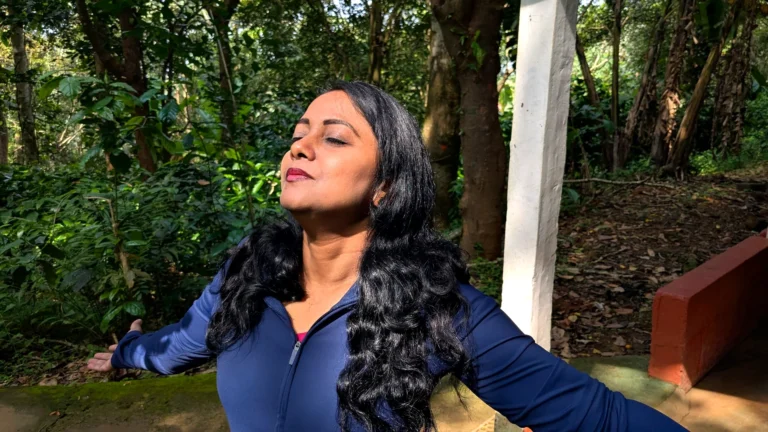
Grounding means letting energy that has gathered in the head flow back into the body and the earth. Kundalini takes what she needs from nature: open sky, sunlight, fresh air, moving water, trees and what I call negative ions, the charged particles found near waterfalls, rivers and forests.
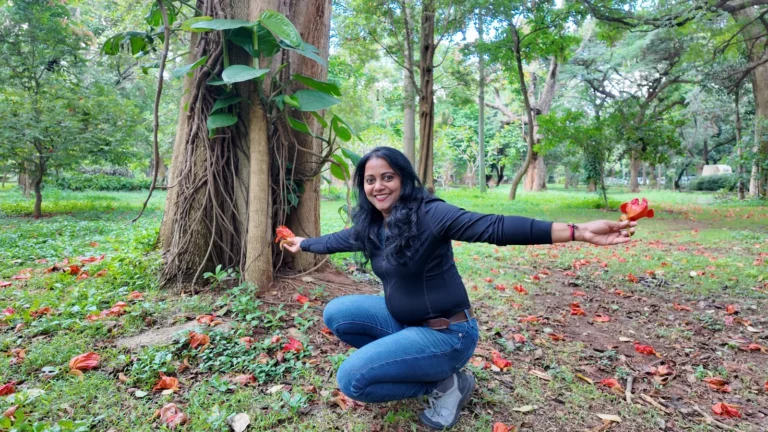
- Lie on the earth: lie on grass or clean ground, open your arms and do nothing. Often belly breathing returns by itself.
- Touch nature: walk barefoot, sit on the ground, touch leaves, grass and trees.
- Use your legs: climb gently, walk on uneven ground and take long steps while swinging your arms.
- Use your senses: notice colours, textures and the smell of flowers and leaves.
- Take soft sunlight: morning light, never staring at the sun.
Choose real green places, not concrete. A 30-minute journey to a park, river or forest is worth making.
How do daily tasks become practice?
When symptoms repeat day after day, the brain is often running the same old pattern. Simple, physical, new actions interrupt it. I call this instinctive living.
- Chores with breath: wash dishes, cook, sweep and fold clothes with a slow mouth exhalation. Feel each object you touch.
- Use the other hand: if you are right-handed, brush your teeth, pour water and stir food with your left hand. Notice the awkwardness; that is the new pathway forming.
- Walk backwards: along a clear corridor, one hand near the wall, with small slow steps.
- Change position often: do not sit in one place and one posture for long.
How do you let kriyas happen safely?
Kriyas are involuntary movements, such as shaking, twisting or jerking, that release extra charge from the nervous system. Once a doctor has ruled out other causes, I teach people not to fight them. Suppressing them out of fear or shame only adds more holding to the body.
- Find a safe, soft place: a mat on the floor, away from furniture and sharp edges.
- Lie down or sit, belly-breathe and let the movement come and go.
- Do not try to create or intensify movements, and do not judge them.
- Afterwards, ground: walk, touch the earth or drink water.
- If kriyas come at work or in public, slow them with mouth exhalation and release them later, in private.
Which practice should you use, and when?
| What you feel | Practice |
|---|---|
| Fatigue, heavy body, brain fog | External breath hold, palming, body tapping, child’s pose |
| Dizziness or spinning | Belly breathing, lying down, grounding in nature |
| Pain or a body that feels frozen | Mouth exhalation in cycles, daily tasks, warm and cool showers |
| Pressure in the legs, pelvis or base of the spine | Squat, long-step walking, climbing |
| Constipation, bloating, gas | Wall reset, belly release, squat, forceful exhalation |
| Sensitivity to sound, light or people | Mouth exhalation, palming, quiet time in nature |
| Heat, chills or sweating | Warm and cool showers, belly breathing |
| Shaking or automatic movements | Letting kriyas happen safely, then grounding |
| Poor sleep | Belly breathing and mouth exhalation before bed, daylight during the day |
From my own practice
This course is full of student stories, so here I share how I use these practices myself. After intense energy downloads, I wake up drained, the way many of you describe fatigue. I do not reach for my phone or force myself out of bed. As soon as I am awake, I lie still and do the external breath hold for ten rounds, and the fog begins to clear. Then I palm my eyes, look around the room and tell my body where it is. I tap my face and head, and rest in the child’s pose on the bed. When some energy returns, I fold the blanket with long out-breaths and start small chores. Then I tap my whole body, sitting and then standing, until warmth comes back. Finally I drink plenty of water. That is my morning, and the fatigue lifts.
Recognise these symptoms in yourself? Alongside your doctor, Sanju can help you understand them in a one-to-one session.
Book a session with SanjuYour first week of practice
Days 1–3
Calm and wake
- Belly breathing for 10 minutes before sleep.
- Five external breath holds and palming on waking.
- Face and head tapping for a few minutes each morning.
- Fifteen minutes outdoors in daylight.
Days 4–7
Move and ground
- Seated body tapping, then the wall reset, once a day.
- The squat for a few slow repetitions, morning and evening.
- One chore a day done with mouth exhalation, and one with your other hand.
- A warm-and-cool shower, and one walk in a green place.
When to get help
These are general instructions. Every body is different. If a practice brings up strong emotions, memories or sensations, slow down and work with guidance.
When to seek medical or professional help
Spiritual practice works alongside medical care. It does not replace it. Physical symptoms can have medical causes, so have them checked before you call them Kundalini. Stop any practice that makes you dizzy, faint, numb, breathless or in pain. Do not practise breath holds or forceful exhalation if you are pregnant or have heart, blood-pressure, lung or seizure conditions unless your doctor agrees. Take care with water temperature, squatting on weak knees and walking backwards. If you ever feel hopeless or think of harming yourself, contact local emergency services or a crisis line. See a doctor for chest pain, fainting, new or severe pain, or any symptom that worries you.
Self-check
- Where does your breath usually move, the chest or the belly?
- Which symptom bothers you most, and which practice in the table matches it?
- Which part of your day could become a practice with a slow out-breath?
Knowledge check
These questions help you check your understanding of this lesson. If you can’t answer one, select it to go back to the part of the lesson that answers it.
Additional resources
This section contains helpful links to related content. It isn’t required, so consider it supplemental.
Lesson complete. Want help applying it to your own life?
Book a session with Sanju
Guru Sanju14 years guiding people through Kundalini awakening, with students in 50+ countries. I help you understand what is happening to you and turn it into growth.
Kundalini Physical Symptoms · Course menu
Kundalini Physical Symptoms