Module 4 · Lesson 5 · 8 min read
Heart Palpitations
Introduction
A pounding, pulsing or fluttering in the chest during Kundalini awakening may be energy at the heart centre, anxiety, or a heart problem, and only a medical check can tell them apart, so that always comes first. I will never tell you that palpitations are Kundalini without that check. The heart is too important.
In this lesson I explain how energy at the heart centre can feel, why it contracts, what to rule out with a doctor and a cardiologist, and how to let the heart centre open once you know your heart is healthy.
Lesson overview
This section contains a general overview of topics that you will learn in this lesson.
- How energy at the heart centre can feel, and where.
- Why the heart centre contracts during awakening.
- How a contracted heart centre affects your posture.
- Why palpitations must be checked medically first.
- Gentle ways to open the heart centre once your heart is cleared.
The core teaching
When Kundalini, your rising life force, reaches the heart chakra and meets contraction, you may feel pulsing, pressure or even pain in the centre of the chest or between the shoulder blades. But palpitations can also be anxiety, a hormonal problem or a heart condition, so get a medical diagnosis first and follow your doctor’s treatment. If your heart is healthy, the heart centre opens through love, expression, an open posture and time in nature.
Is it heart palpitations, energy or anxiety?
First, notice exactly where and how you feel it. Energy at the heart centre is often felt not as the heartbeat itself but as something pulsing or moving in the middle of the chest, around the centre of the ribcage. It may come with pressure or a dull ache. If it lasts, some people feel it at the back too, between the shoulder blades. In the energy body, I understand the heart centre as extending right through the chest, front to back.
A true palpitation is different: an awareness of your heart beating fast, hard, irregularly or with skipped beats. That needs a doctor, whatever else is going on.
From the inside, these can feel very similar. That is exactly why you cannot decide this on your own.
Why must palpitations be checked first?
Palpitations can come from heart rhythm problems, thyroid overactivity, anaemia, low blood sugar, dehydration, fever, hormonal changes including menopause, caffeine, nicotine, alcohol, some medicines and supplements, and anxiety or panic. Some of these are harmless. Some are serious.
I cannot diagnose a heart problem, and I will not try. A doctor can examine you and arrange tests such as an ECG, blood tests or a heart monitor, and refer you to a cardiologist if needed.
- If it is anxiety: get it diagnosed and follow your doctor’s guidance. If medicine is needed, take it.
- If it is a heart problem: get it treated. Do not confuse it with Kundalini.
- If everything is clear: then it makes sense to look at the energetic side.
Why does the heart centre contract during awakening?
In my understanding, the heart chakra closes when love cannot flow: when you cannot love freely, or cannot share your love with anyone. During the dark night of the soul, many people feel isolated and alone, cut off from any real exchange of love. If Kundalini is rising at that time, she may be unable to move past the heart.
Beyond the heart chakra lies expansion: the throat, the third eye and the crown. To pass through, the energy needs the heart to open. When it is held closed, energy gathers there as pressure, pulsing or ache. Some people then feel Kundalini stuck in the throat or head, but in my experience the upper centres do not clear fully until the heart has been processed.
How does a contracted heart centre affect posture?
When there is pressure in the centre of the chest, the body often protects it by folding forward. The shoulders round, the chest drops and you slouch without noticing. That affects the core: the spine can no longer carry the energy gathered in the middle of the body, and the contraction spreads through your whole posture.
So posture is both a sign and a way in. Opening the chest physically helps the heart centre open energetically. The wall reset and the posture reset both help.
What helps the heart centre open?
Once your doctor has found no heart problem, these are gentle ways to let the heart centre expand:
- Go into nature early: sunrise, birdsong, misty grass, open views. In such places the chest tends to open by itself.
- Stand and walk openly: look up and into the distance, let your arms swing, and let your chest lead.
- Breathe without gaps: the pendulum breath, with the in-breath flowing into the out-breath, brings you into the heart. Never breathe fast or forcefully.
- Hold yourself: the vagus hold, with your hands under your armpits, calms a racing system.
- Let love move: express affection, call someone you love, care for a plant or an animal. The heart opens through giving and receiving, not through thinking about it.
- Follow your life purpose: opening the heart is not a single event. It deepens stage by stage as you live in the direction your life force is asking for.
For heart-chakra pain and blockage in depth, see The Heart Chakra in the Chakras and Blockages course.
From my own practice
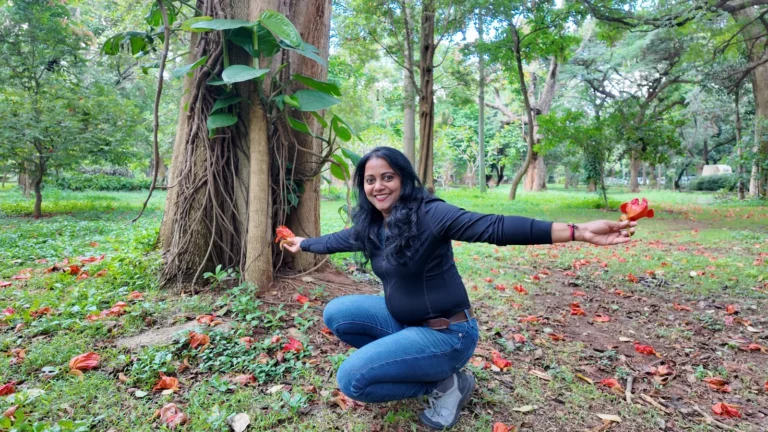
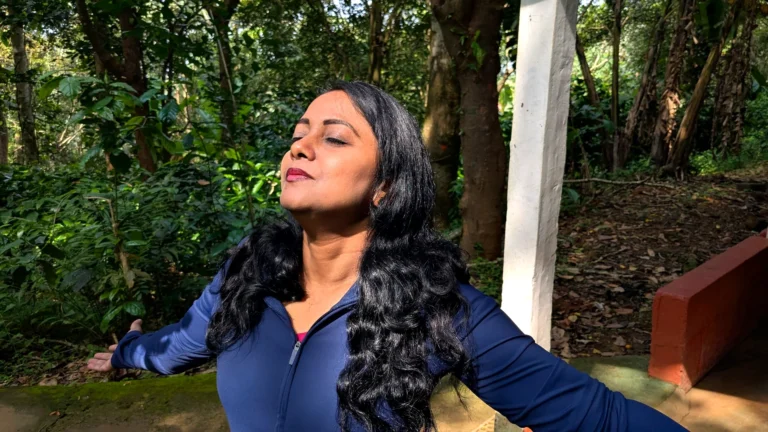
When I go into nature in the early morning, I listen to the wild crickets keeping their own rhythm. The sun is just beginning to rise, and the birds start to call. As I walk into that, my chest expands without my doing anything. My heart centre does not stay contracted. I feel like standing openly, walking in a particular direction, looking upwards and into the distance. I look at the wet, misty grass and take in everything with all my senses. That is what my life force wants in that moment, and when I give it, the heart opens. I share this because the heart centre is not opened by force. It opens when you put yourself in the conditions where opening is natural.
Recognise these symptoms in yourself? Alongside your doctor, Sanju can help you understand them in a one-to-one session.
Book a session with SanjuWhat to do this week
First
Get checked
- See a doctor about the palpitations, and ask whether you need an ECG or heart monitor.
- Note when they happen, how long they last, and what you had just eaten, drunk or done.
- Cut down caffeine, energy drinks, nicotine and alcohol.
- Pause breath holds and forceful breathing until your doctor has seen you.
Once your heart is cleared
Open gently
- Spend early mornings outdoors at least three times this week.
- Do the wall reset each day to open the chest.
- Practise the pendulum breath for a few minutes when the chest feels tight.
- Share love with one person or living being each day.
When to get help
Even after your heart is cleared, sensations at the heart centre that keep returning deserve guidance. Personal diagnosis can show why the energy is held there.
When to seek medical or professional help
Spiritual practice works alongside medical care. It does not replace it. Call emergency services for chest pain or pressure, especially if it spreads to the arm, jaw or back, or comes with breathlessness, sweating, nausea, fainting or a very fast or irregular heartbeat that does not settle. See a doctor for any palpitations that are new, frequent or long-lasting, or if you have a heart condition. Do not stop or change heart or anxiety medicines without your doctor. Do not practise breath holds if you have heart, blood-pressure, lung or seizure conditions or are pregnant, unless your doctor agrees. If you feel hopeless, contact local emergency services or a crisis line.
Self-check
- Has a doctor checked your heart?
- Where exactly do you feel the sensation: the heartbeat itself, or the centre of the chest?
- Who or what do you most want to share love with right now?
Knowledge check
These questions help you check your understanding of this lesson. If you can’t answer one, select it to go back to the part of the lesson that answers it.
Additional resources
This section contains helpful links to related content. It isn’t required, so consider it supplemental.
Lesson complete. Want help applying it to your own life?
Book a session with Sanju
Guru Sanju14 years guiding people through Kundalini awakening, with students in 50+ countries. I help you understand what is happening to you and turn it into growth.
Kundalini Physical Symptoms · Course menu
Kundalini Physical Symptoms