The Core Teaching
The art of doing nothing is a deliberate pause in the habit of spending attention everywhere. I ask you to sit quietly, observe thoughts and sensations as a witness, and let the urge to follow each one settle. The bank-account analogy describes conserving a reserve rather than exhausting yourself in constant mental activity. Return from that pause to the task you choose. The purpose is to bring collected attention into action instead of confusing uninterrupted busyness with productive work.
Part of my Life After Kundalini Awakening guide · Teachings by Guru Sanju
Introduction
What is the Art of Doing Nothing? How can you raise your productivity in work by practicing this art?
The Art of Doing Nothing means you are reclaiming all the energies you have scattered and distributed into your body and mind, and bringing them back into your center. Many misunderstand this phrase and assume that doing nothing externally is laziness or passivity. But here, doing nothing does not mean external inactivity. It means consciously reclaiming and conserving your disintegrated energies, concentrating them at your center.
At this center, you are nothing other than pure consciousness—awareness reclaiming itself. When you do this, you become powerful, not drained. And from that power of conserved energy, you can focus more on your work with deep concentration and heightened efficiency.
Understanding the Center
You can practice the Art of Doing Nothing throughout the day by periodically bringing your attention back to your inner center. This center is located in the region between your two eyes, behind your forehead. It is the point through which you truly perceive the world.
Initially, you may not feel this center. What occupies your head most of the time is your restless mind. The mind constantly produces thoughts, scattering your energy outward. But when you begin to bring your attention to the space behind the eyes, by gently closing them and withdrawing your awareness inward, you will begin to sense something.
At first, you may see the hovering of thoughts across your inner blank screen, as though a movie is playing in your mind. Gradually, you will notice these thoughts more clearly. Some are random, some meaningless, some connected with your past, and others tied to future worries or fantasies.
When you keep observing your thoughts, a transformation begins. Simply watching them—not with your physical eyes, but with the detached presence of a witness—causes them to vanish.
The Witness Consciousness
To watch your thoughts requires you to be present as a witness. Imagine yourself in a theater: you sit as part of the audience, while a movie plays on the screen before you. You are somehow detached from the movie. You may enjoy it, but you are not the movie.
Likewise, your thoughts, emotions, bodily sensations, and spiritual impressions are all like moving images on your internal screen. They come and go. But you, the witness, remain.
When you observe your thoughts in this way, you begin to experience a profound distinction between yourself and these objects of experience. Thoughts, emotions, sensations, and feelings are not you. You are the center, the pure awareness observing them.
Locating and Reclaiming Energy
As this detachment grows, you can gradually locate the true center from which your energies emanate and to which they must return. The practice of doing nothing is the art of reclaiming all energies to this center.
This is powerful because as you keep practicing, you connect to your inner GPS—the guiding intelligence of your spirit. You connect to your consciousness directly. And when you operate from consciousness rather than from the scattered impulses of the mind, you discover that your life and your career come under your control.
The Layers of Existence
You are fundamentally an energetic being. Your existence can be compared to an onion with multiple layers.
- At the core lies the spirit: pure awareness, formless and subtle.
- Around it lies the mind: an energetic layer, subtle in its nature.
- On the outermost layer lies the physical body: gross matter composed of the five elements.
All of these layers are energetic in essence. At your center, consciousness distributes energy to the mind and body so they can function. But when the mind becomes overactive and driven by desire, it steals excessive energy from this central reserve. This leaves you depleted, distracted, and unable to focus productively.
The Bank Account of Energy
Let us take a simple analogy. Suppose you have one lakh rupees in your bank account. This entire sum represents the total reserve of energy available to your consciousness.
When you wish to perform a task, you allocate part of this energy. For example, you may give twenty thousand to the mind and twenty thousand to the body to complete a function, like hiring workers to do a job. But you will never give away the entire one lakh to them, leaving yourself with zero.
If you did that, you would be bankrupt. Similarly, if you allow the mind to take your entire energy reserve, you become energetically bankrupt—scattered, restless, and unproductive.
The art of doing nothing is the art of withdrawing this energy allocation back into your central account. It is reclaiming the twenty thousand from the mind, the twenty thousand from the body, and re-depositing them into your consciousness.
Experiencing the Void
When you reclaim your energy, you experience your center as nothingness. At the center, you are nothing. You are the blankness, the void, the pure energetic field. And paradoxically, this nothingness is the most powerful state.
From here, you can re-engage with life, work, and creation with full concentration and efficiency. By doing nothing externally but reclaiming internally, you prepare yourself to do everything powerfully when required.
How the Mind Robs You
Understand clearly how the mind robs you of energy. The mind itself is unconscious. When it dominates, it makes you unconscious.
Everyday, you can observe this robbery. You feel depleted, restless, unable to concentrate. You may not be able to measure the exact volume of energy being taken, but you feel the effects—loss of energy, lack of focus, inability to work with creativity or joy.
This is why practicing the art of doing nothing becomes essential. By withdrawing energy from the restless mind and unconscious body, and reclaiming it at your center, you restore balance.
Practical Application
How can you apply this art in daily life?
- Pause periodically. Throughout your day, stop for a few minutes. Close your eyes, bring your attention to the center behind your eyes.
- Observe. Watch thoughts, emotions, and sensations pass by. Do not fight them, just witness.
- Detach. Feel the separation between yourself (the witness) and these passing objects.
- Reclaim. Sense that your scattered energy is returning to your center, like money being deposited back into your account.
- Rest in nothingness. Allow yourself to experience the blank, powerful void of pure awareness.
With repeated practice, you will find yourself increasingly rooted in this center. Then, when you return to work, your concentration, efficiency, and creativity naturally rise.
Productivity Through Stillness
This teaching reveals a paradox: doing nothing becomes the key to doing everything better.
By resting in your center, you conserve energy. You become powerful as consciousness itself. You stop wasting energy in the endless chatter of the mind. Instead, you hold your reserve intact, allowing only the necessary energy to flow into action.
From this space, your productivity rises. You achieve more with less effort. You work with precision, clarity, and purpose.
Personal Guidance
If you wish to learn the art of doing nothing more deeply, it requires experiential guidance. Each individual has a unique energy field, and by reading your inner GPS, I can guide you in real time on how to apply this technique in your life.
This art is not about philosophy alone. It is about practical energetic mastery—conserving, reclaiming, and channeling your consciousness.
Conclusion
The Art of Doing Nothing is not laziness. It is the supreme discipline of reclaiming your scattered energies, locating your true center, and operating from pure awareness.
By practicing it, you become powerful, concentrated, and creative. Your work efficiency increases, your focus sharpens, and your life comes under conscious control.
This is the true productivity of doing nothing—the productivity born not of strain and overwork, but of centered awareness, conserved energy, and conscious action.
Whenever you wish to deepen this practice, connect with me. Together, we can explore your inner GPS and discover how the art of doing nothing can transform your life and work.
Thank you, and may you reclaim your center with power and grace.
Choose Your Next Discourse
Learn to Pause Without Filling Every Moment
I am Guru Sanju. I guide you to practise observing without immediately reacting, recognise where attention is scattered and return to work with a clearer focus.
Latest Life After Kundalini Awakening Discourses

How to Integrate Kundalini Into Work and Daily Life
Integration begins inside ordinary activities, not after they have all been removed from your life. Taste the meal you are eating, notice the water you drink, move between periods of work, and let household tasks involve the whole body. These are opportunities for attention to become embodied instead of remain occupied by interpretations of Kundalini. Adapt the practice to your actual capacity and responsibilities. My deeper instruction is to make consciousness a way of living, with growing self-knowledge guiding the choices you can responsibly make today.
Read discourse →
Why Kundalini Awakening Causes Loss of Motivation and Purpose
Do not make discovering one permanent life purpose a condition for beginning to live. I distinguish your particular potential from the more immediate purpose of being present to life itself. Start with a small action: step outside, explore an unfamiliar direction, feel the environment, or respond to a simple opportunity for connection. Inspiration can develop through participation rather than arrive before it. Care for the health that makes action possible, then allow curiosity and lived experience to reveal a direction more personal than a borrowed checklist of achievements.
Read discourse →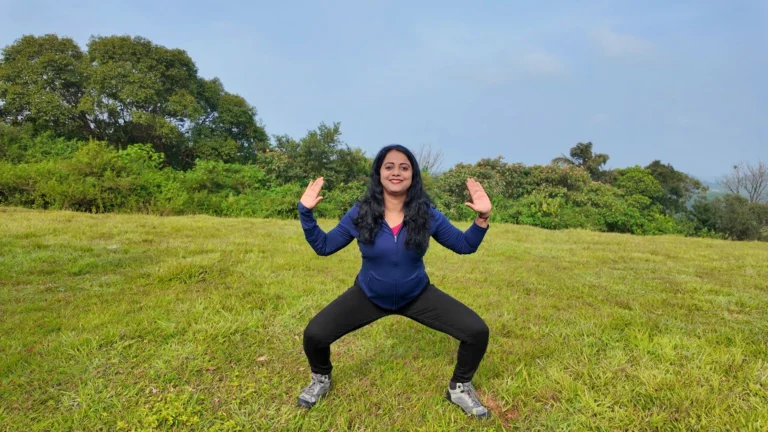
Change Your Posture, Change Your Energy, Change Your Life
Study how you actually live before searching for a more extraordinary spiritual experience. Notice the rushed speech, exhausting commute, habitual posture, and professional routine that have become automatic. Change one pattern gently, observe its effect, and carry that attention into listening, work, and boundaries. My central instruction is to embody the capable person you already know is possible. Presence is built through repeated conscious choices; it becomes visible in how you inhabit the body, treat your time, and meet the person in front of you.
Read discourse →All Discourses in Life After Kundalini Awakening
133 published discourses, listed alphabetically. Choose a title to read the full discourse.
- Alpha Male Finds Happiness Within His Body
- Alpha Male Is Creator — Not Matrix Character
- Be a Powerful Self-Made Woman
- Be Demanding in Life: The Secret to Health and Happiness
- Benefits of Being Vegetarian and How to Become a Pure Vegetarian
- Benefits of Solo Traveling for Healing Brain
- Beyond the Matrix: Finding Purpose Amid Work, Energy, and Awakening
- Break Free from Suppression and Discover Your Soul’s True Purpose
- Change Your Posture, Change Your Energy, Change Your Life
- Come Out of Inhibition and Turn Life into Celebration
- Conscious Eating, Breathwork, and Acting for Transformation
- Conscious Eating: The Secret to Reviving Your Lost Hunger
- Conscious Living: The Key to Harmonizing Kundalini and Daily Life
- Cook Your Meal to Heal- Brain Rewiring through Cooking
- Cooking Nepali Dal-Bhaat to Heal Brain and Nerves | Freedom Project for Mountain Stamina
- Cooking Therapy: Heal Body, Mind, and Energy Through Conscious Cooking
- Cosmetic Changes Will Never Make You Healthy — Nature Will
- Creation vs. Consumption: Why Creation Expands You and Consumption Contracts You
- Discover Your Inner GPS Through Conscious Expression
- Don’t Adjust. Be Expressive.
- Energy Science: Understanding Positive and Negative Energies in Nature
- Flow in Life: How to Achieve a Flow State?
- Freedom Begins When You Leave the Matrix Addiction
- Freedom Isn’t in Cities — It’s in the Wild
- Give More Prana — Accelerate Your Kundalini Fast
- Health and Happiness Begin When You Leave the Matrix
- Health and Happiness Begin Where Society Ends
- Health Is the Boldest Decision of Your Life
- How Can You Become a Smart and Intelligent Woman?
- How Conscious Cooking Rewires the Brain and Heals the Nervous System
- How Conscious Eating Awakens Kundalini Faster
- How Conscious Eating Made Me Healthy, Happy, and Energized
- How Conscious Living Rewires Your Brain and Awakens Kundalini
- How Does Traveling Benefit You in Your Kundalini Awakening Journey?
- How I Healed His Trauma and Revealed His Life Purpose
- How I Rebuild a Man After Kundalini Destroys His Old Life
- How I Turned a Broken Nurse Into an Energetic Healer
- How Kundalini Awakening Transforms a Man
- How Kundalini Healed Her Mind, Body, and Confidence
- How Kundalini Heals Trauma and Reveals Your Life Purpose
- How Kundalini Unlocked Her Purpose as a Healer
- How to Be More Action Oriented – Action vs Motion
- How to Become a Powerful Person? Becoming an Empowered New Being
- How to Become a Practical Man?
- How to Become a Smart and Intelligent Man?
- How to Create the Life You Want?
- How to Create Your Life? The Most Practical Guide
- How to Discover Your Life Purpose Before It’s Too Late
- How to Find Meaning in Life?
- How to Find What You Love?
- How to Integrate Kundalini Into Work and Daily Life
- How to Know Your Inner Power
- How to Start Intuitive Eating?
- How to Stay Powerful After Kundalini Awakening
- How to Use Kundalini Energy to Meet the Fullness of Life?
- I Am Living Kundalini’s Best Life
- I Chose Freedom Over the Matrix and Became the Creator of My Life
- I Free You From the Mind to Live Your Life Purpose
- I Left the Matrix by Living Each Moment Consciously
- I Left the Matrix Forever to Enjoy the Happy Kundalini Life
- I Took Action and Left Mediocrity Behind
- IGG Freedom Model Part 1- Your Life is a Trip on Planet Earth 🌎
- Kundalini and Choosing Freedom Over the Matrix
- Kundalini and Consciously Creating Your Life
- Kundalini and the Power of a Simple Life
- Kundalini Awakening and the IGG Freedom Model
- Kundalini Awakening and Unsociety- The Best Freedom Guide
- Kundalini Awakening and Yogic Lifestyle
- Kundalini Awakening Needs Action, Not Overthinking
- Kundalini Awakening Needs Expression, Not Waiting
- Kundalini Demands Bold Decisions for Your Life
- Kundalini Freedom for Men: Consciousness and Breath
- Kundalini Is Awakened… Then Why Are You Still Stuck?
- Kundalini Is for Kings, Not Beggars
- Kundalini Journey – Traveling by Flight Tips
- Kundalini Life Needs Personal Happiness First | Personal Happiness Index
- Kundalini Wants You to Celebrate Life
- Life After Kundalini Awakening — Real Life Begins
- Life Has No Meaning—but It Is Not Meaningless
- Life Is Calling: Awaken, Breathe & Rise in Kundalini Power
- Life Purpose and Kundalini Timeline: Clear Guidance for Work, Growth, and Spiritual Freedom
- Live Your Life First — Kundalini Awakens Naturally | Best AQI Awakens Kundalini Power
- Matrix Is the Worst Addiction — Leave It Now
- Normal Life Is Making You Sick
- Path of Freedom: Life Purpose & Kundalini Awakening
- Reading Books: The Gateway to Inner Wisdom
- Real Dopamine and Testosterone: The Himalayan Secret
- Sanju Frequency: Exploration Frequency of Living Now
- Spirituality Is Not the Escape Route
- Stop Becoming. Start Living.
- Stop Living the Matrix Script — Create Your Own Life Itinerary
- Stop Planning Life and Let Kundalini Flow
- The Art of Balancing Body, Mind, and Spirit Through Inner GPS
- The Art of Developing Healthy Habits
- The Art of Doing Nothing: How to Become Productive by Doing Nothing
- The Art of Mastering Challenges in Learning New Skills
- The Art of Personality Development through Your Inner GPS
- The Benefits of Small Trekking in Nature
- The Best Way to Move Kundalini Is to Travel
- The Biggest Mistakes of Your Life
- The Extrovert’s Path: Harnessing Confidence and Balance in Life
- The Kundalini Secret Behind Conscious Eating
- The Power of Action: Why Practical Experience is the Key to Success
- The Purpose of Human Life – How to Find Your Life Purpose
- The Role of Minimalistic Living in Spiritual Progress
- The Sanju Frequency: The New Life Frequency of Existence
- The Second Chance – Choosing to Live Life Now
- The Silent Power of the Introvert: How to Be Confident in Your True Nature
- The Transformative Power of Laughter Therapy
- Unlock Flow Frequency and Let Life Guide You Naturally
- Uprooting from the Matrix: The Kundalini Leap into the Unknown
- Weight Management: How to Lose or Gain Weight and Stay Energetic
- What Is Inner GPS? How to Use Inner GPS for Your Progress?
- What Is Intelligence? How to Become Intelligent?
- What Is Youthfulness? How to Stay Youthful?
- What Next? Life vs. Death
- What to Do When You Are Clueless About Life in Kundalini Awakening?
- When Kundalini Awakens, Life Demands Real Action
- Who Is a Self-Made Man? How to Become a Self-Made Man
- Why Are Shifts Required in Life?
- Why Following My Excitement Changed My Entire Life
- Why Is Eating Meat Bad for You?
- Why Is Gratitude Important? The Transformative Power of Gratitude
- Why Kundalini Awakening Causes Loss of Motivation and Purpose
- Why Kundalini Heals You by Pulling You Out of the Matrix
- Why Kundalini Separates You From Everything Familiar
- Why You Can’t Be Happy and Healthy in the Matrix
- Why You Cannot Be Happy in the Matrix
- Why Your Diaphragm Controls Your Life
- Without Traveling Your Kundalini Will Stagnate
- You Are Responsible for Your Life — Become Alpha
- You Exist Others Adjust – Secret to be the Phoenix
- Your Health Is the Real Wealth in Kundalini Awakening